


MEET THE OSPREY (PANDION HALIAETUS): NATURE’S MASTER FISHER & ONE OF THE WORLD’S MOST SUCCESSFUL BIRDS OF PREY.
Near any body of water in Southwest Florida, the osprey is impossible to miss and even harder to forget. Its piercing call announces its presence, but it is the spectacular plunge from sky to water that reveals what this remarkable bird was born to do: Catch FISH!
THE OSPREY’S FAVORITE MEAL: SUSHI & THE FRESHER THE BETTER
In North America, familiar examples of avian raptors include eagles, hawks, owls, falcons, kites (See July’s Gazette for the Swallow-Tailed Kite), and of course ospreys. The osprey is unlike other raptors belonging to a unique family all its own. The osprey is the sole living representative of the family Pandionidae. Scientists believe this lineage of raptor diverged from other birds of prey millions of years ago, evolving almost exclusively around one food source: FISH.
The osprey is known by many names including the fish hawk, sea hawk, and river hawk. It is one of nature’s most specialized and accomplished hunters seemingly built for the sole purpose of catching fish. Powerful talons designed specifically for gripping slippery fish and an almost worldwide distribution has earned the osprey a reputation as one of the planet’s greatest fishing birds.
Ospreys are opportunistic feeders preferring fish and they will simply catch whichever fish are most abundant in local waters. More than 99 percent of their diet consists of live fish. Rarely, they may also consume small snakes, frogs, smaller birds, or even rodents. These meals, however, represent only a tiny fraction of their diet. Ospreys almost always capture their own meals and unlike bald eagles they rarely scavenge.
Living in Grandezza and spending any time at all around the golf course you will have surely seen one or more of these elite flyers gliding above one of our many well-stocked ponds or possibly perched high in one of the South Florida Slash Pine trees that line the golf course. They frequently build nests high atop these trees which provide a safety net of sorts that offers protection from potential ground-based intruders.
QUICK FACTS ABOUT THE FISH HAWK (OSPREY)
Adults measure:
- Length: 21–26 inches (53–66 cm)
- Wingspan: 5–6 feet (1.5–1.8 meters)
- Weight: 3–4.5 pounds (1.4–2 kg)
- Females are generally larger and heavier than males
- Both sexes appear similar in plumage.
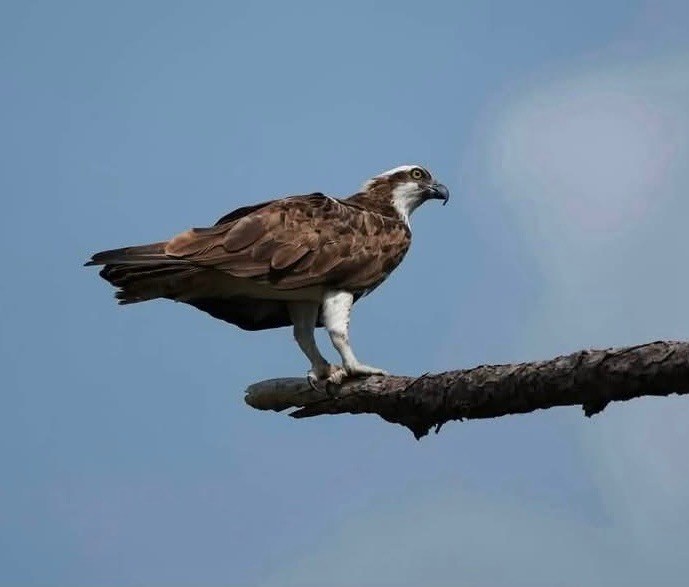
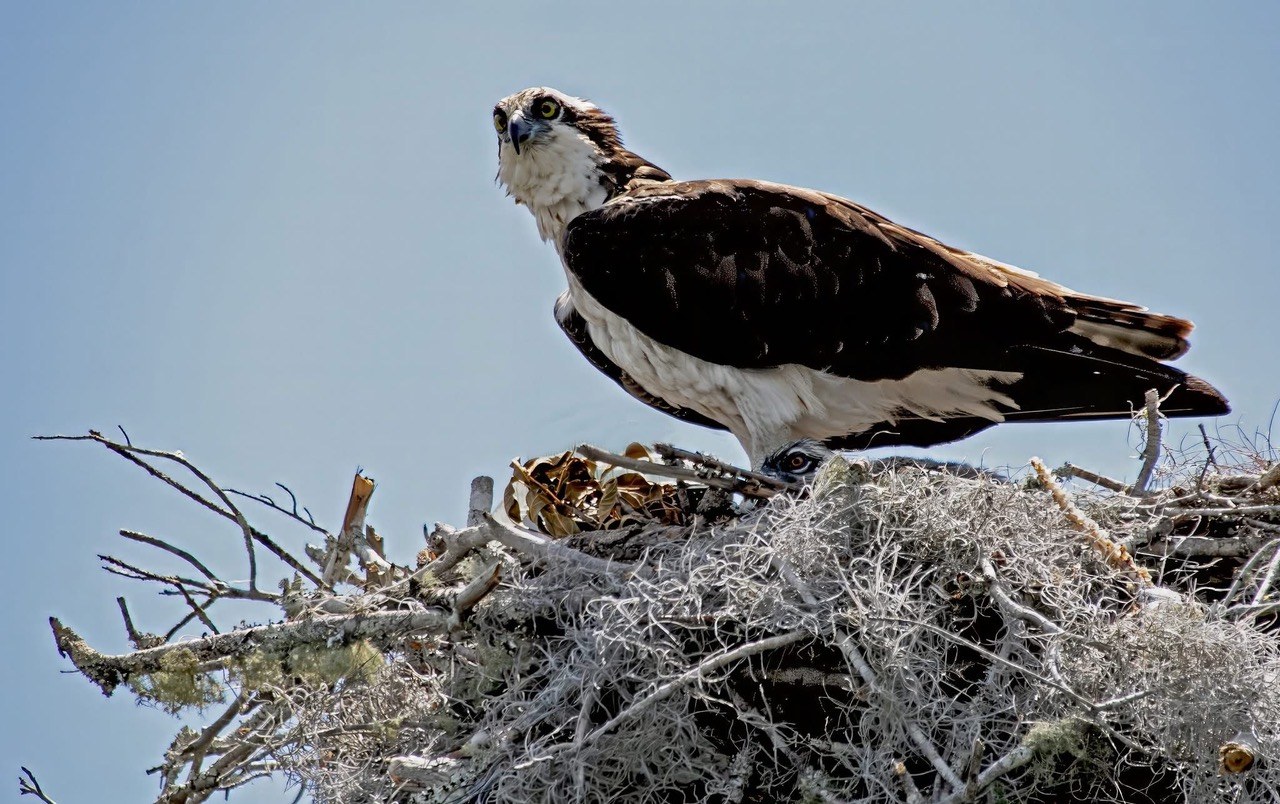
Their striking appearance includes a white head, a bold dark eye stripe, a white breast and long narrow wings.
Ospreys can be found on every continent except Antarctica near any place where you can easily find fish. They have one of the widest raptor distributions and Florida has one of the largest breeding populations with habitats including oceans, rivers, lakes and reservoirs.
THE OSPREY IS BUILT FOR ONE PURPOSE: CATCHING FISH
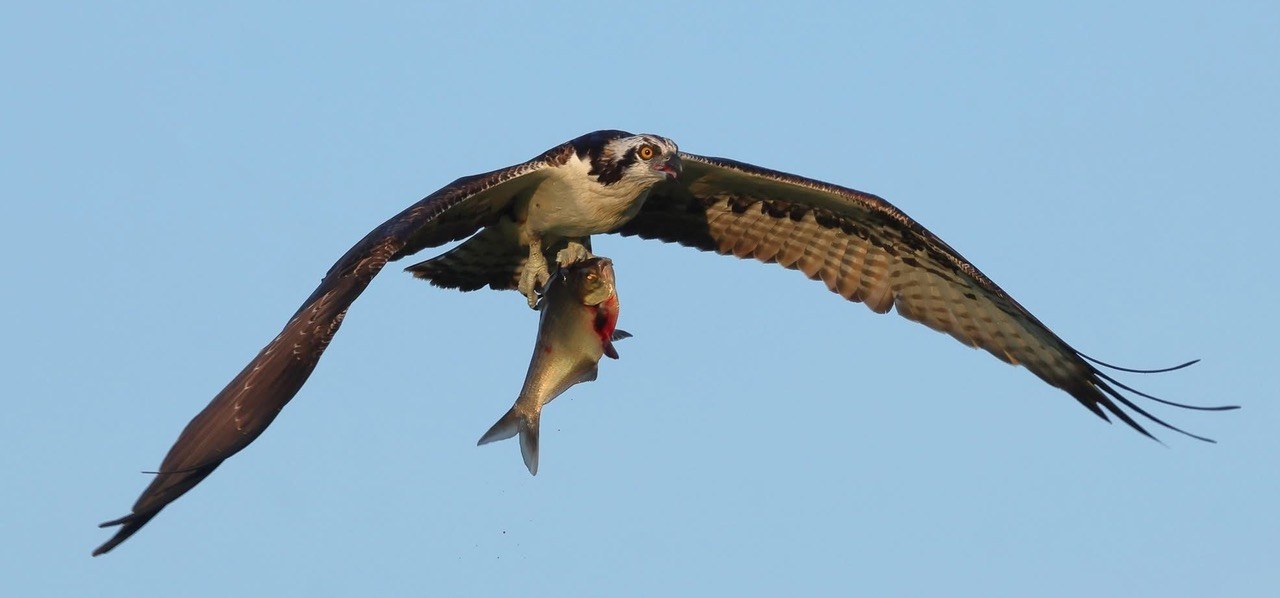
Most birds have three toes pointing forward and one backward. Ospreys possess a reversible outer toe. This allows them to grasp fish with two toes forward and two toes backward. This “zygodactyl” grip creates an incredibly secure hold on slippery prey that they will typically carry straight forward through the air as if the fish was swimming in air. This preserves energy in flight as the prey becomes more aero dynamic.
SPINY FOOT PADS
The bottoms of an Osprey’s feet are covered with tiny sharp projections called spicules.
These function almost like sandpaper. Together with sharply curved talons, they prevent struggling fish from escaping.
WATERPROOF PLUMAGE
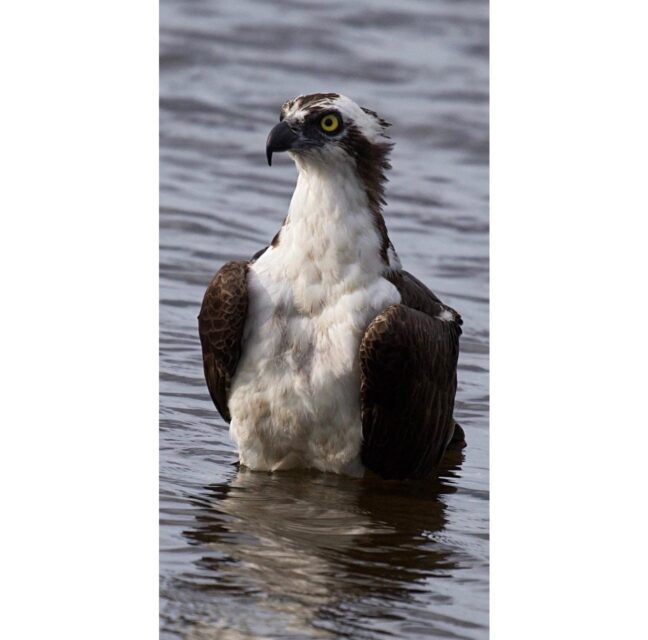
Ospreys, unlike most hawks, frequently become soaked after plunging into water.
Their feathers are coated with oils that repel water while allowing rapid drying.
After surfacing, an Osprey often shakes itself vigorously before taking flight.
CLOSABLE NOSTRILS
One amazing adaptation is their ability to close their nostrils during dives. This prevents water from rushing into their nasal passages when they strike the water’s surface while hunting at a high rate of speed.
DEDICATED PARTNERS & A FAMILY FOR LIFE
Ospreys generally mate for life. Every spring the male returns first and begins repairing the nest while awaiting the female’s arrival. Osprey nests are constructed primarily from sticks, and they are enormous, typically reaching six feet across, ten feet deep. Pairs frequently reuse the same nest for decades. Unused areas in the nests are also wildlife apartments offering shelter to a variety of other birds.

THE DDT CRISIS
By the mid-20th century, Osprey populations had collapsed across much of North America.
The culprit was DDT, an agricultural pesticide which had heavily accumulated within fish. As Ospreys consumed contaminated prey the chemical caused eggshells to become dangerously thin. Osprey parents, as a result, accidentally crushed eggs during incubation. By the early 1970s many nesting territories were abandoned, coastal populations nearly disappeared, and their reproductive success plummeted.
The banning of DDT, habitat protection, cleaner waterways, and installation of nesting platforms transformed the species’ future. Ospreys today represent one of conservation’s greatest success stories.
WHY THE OSPREY MATTERS
The Osprey is far more than a skilled predator. It serves as a living indicator of the health of our rivers, lakes, estuaries, and coastlines. Its dramatic recovery from the devastating effects of DDT demonstrates what can happen when science, conservation policy, and public support work together. Few species are so perfectly engineered for a single purpose with every aspect of its anatomy from its reversible outer toe and spiny foot pads to its closable nostrils and exceptional eyesight evolving to make it an unrivaled fisher.