

Southwest Florida’s Master of the Sky
Each spring I enjoy seeing the first arrival of the majestic Swallow-tailed Kite. None of the many remarkable birds that call Southwest Florida home captures the imagination quite like these graceful fliers. Its striking black-and-white plumage, long pointed wings, and deeply forked tail make this elegant raptor appear almost weightless as it glides through the sky. The annual return of the Swallow-tailed Kite in spring signals the arrival of warmer weather and the beginning of Florida’s nesting season. The bird’s graceful flight, social behavior, and incredible migration make it one of the most fascinating wildlife species in the region. Southwest Florida is particularly important to the species, providing some of the most productive nesting and feeding habitats in North America.
A Distinctive Bird of Prey
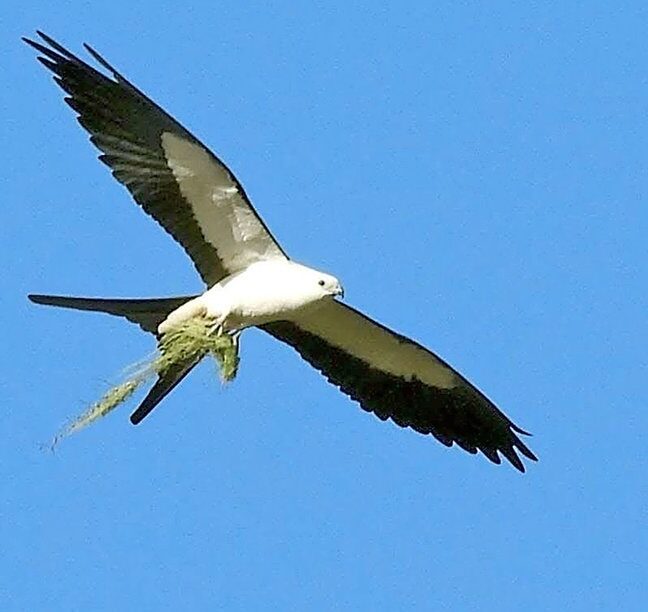
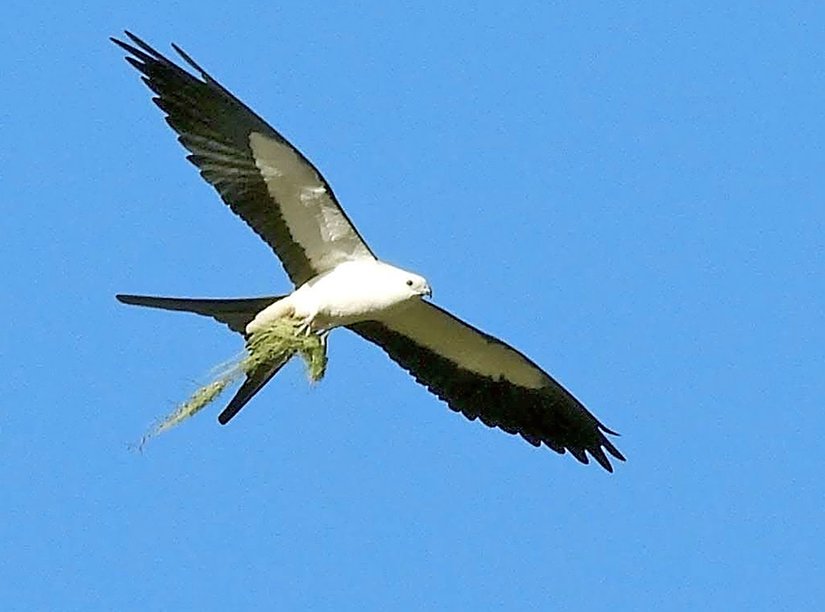
The Swallow-tailed Kite (Elanoides Forficatus) is one of North America’s most beautiful raptors. Adults measure about 20 to 25 inches in length and possess a wingspan of approximately four feet. Their bodies are bright white, contrasting sharply with black wings and tails. The bird’s most recognizable feature is its deeply forked tail which functions much like a rudder, allowing for extraordinary maneuverability during flight.
While hawks and eagles frequently perch while hunting Swallow-tailed Kites spend much of their lives airborne. They are capable of catching prey, drinking water, and even collecting nesting materials while in flight. They are most often seen gliding effortlessly without flapping their wings for extended periods, banking and turning with remarkable precision. Their aerial agility has appropriately earned them a reputation as one of the most graceful birds in the Americas.
Southwest Florida: A Critical Stronghold
Southwest Florida contains some of the most important habitats in all of the United States for Swallow-tailed Kites. Large conservation areas such as the Corkscrew Regional Ecosystem Watershed (CREW), Corkscrew Swamp Sanctuary, and the extensive wetlands and forests throughout Lee, Collier, Hendry, and Charlotte counties provide ideal nesting and feeding conditions. Researchers have documented numerous nesting territories within these landscapes, emphasizing their importance to the long-term survival of the species.
The region’s tapestry of cypress swamps, pine flatwoods, wet prairies, marshes, and forested wetlands offers both nesting sites and abundant prey. Swallow-tailed Kites prefer large, relatively undisturbed forest tracts with tall trees rising above the surrounding canopy. These elevated trees provide security from predators and excellent vantage points for launching into feeding areas.
The species is one of Florida’s most iconic birds, and as such it serves as the symbol of the Great Florida Birding and Wildlife Trail which is a network of more than 500 wildlife viewing sites across the state. The wildlife trail is a go-to resource for finding the best spots to see Florida’s native birds, butterflies, and other wildlife.
An Epic Annual Migration
One of the most remarkable aspects of the Swallow-tailed Kite’s life is its extraordinary migration. Each year the birds spend the winter months in South America, particularly in the Amazon Basin and surrounding regions. Beginning in late February and early March, they return to Florida after traveling thousands of miles across continents. Southwest Florida is often among the first regions where returning birds are observed. I first saw them in Northeast Florida, near Jacksonville, where these distinctive, graceful fliers appeared to dance effortlessly high overhead, serving as a welcome indication that spring had arrived.
Upon arrival the birds establish breeding territories and begin nesting activities. They remain throughout the spring and summer, raising their young before gathering in large communal roosts during July and August. These pre-migration gatherings may include hundreds or even thousands of birds. Once the breeding season ends, they begin another long journey southward, crossing the Gulf of Mexico, Central America, and portions of South America before reaching their wintering grounds.
Scientists estimate that most of the United States breeding population nests in Florida, making the state’s conservation efforts particularly important for the species.
Nesting and Family Life
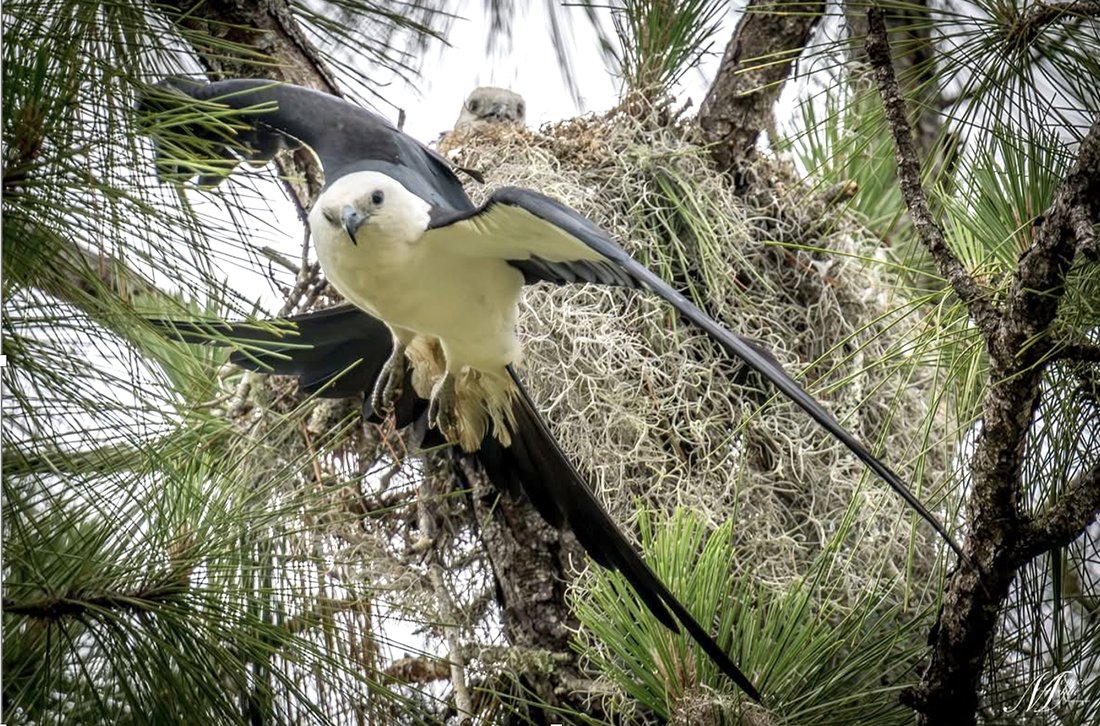
Swallow-tailed Kites typically begin nesting shortly after returning to Florida. Pairs often reuse traditional nesting areas and may return to the same locations year after year. They build relatively small nests composed of sticks, Spanish moss, and other vegetation, usually near the tops of tall pines or cypress trees. Nests are often placed more than sixty feet above ground and typically are very difficult to spot with the naked eye.
Unlike many birds of prey that defend large territories, Swallow-tailed Kites are surprisingly social. Several pairs may nest in the same general area forming loose colonies. This social behavior provides additional protection against predators and helps individuals locate productive feeding areas.
Females typically lay two to four eggs, and both parents participate in caring for the young. During the nesting season, adults spend much of their time hunting food and delivering it to the nest. Young birds remain dependent on their parents for several weeks after fledging before joining larger groups later in the summer.
Masters of Aerial Hunting
The diet of the Swallow-tailed Kite is as unique as its flight style. These birds feed primarily on large insects, including dragonflies, cicadas, grasshoppers, beetles, termites, and wasps. They also consume small reptiles such as lizards and snakes, along with frogs and occasionally small birds.
What makes their hunting behavior incredible is that most prey is captured while the bird remains airborne. Swallow-tailed Kites can grab insects from the air, snatch lizards from treetops, and even carry entire wasp nests back to feeding perches or nests. Their specialized digestive systems make them the Honey-Badger of the skies because it allows them to consume prey that many other birds avoid including stinging insects. Wasps? Kites don’t care about stingers!
In Southwest Florida the wetlands and forests surrounding nesting sites provide abundant food sources. Wet prairies, marsh edges, rivers, and forest openings are particularly important feeding habitats.
Conservation Successes and Challenges
Historically, Swallow-tailed Kites nested across much of the southeastern and central United States, extending as far north as Minnesota and Wisconsin. During the nineteenth and early twentieth centuries, however, the species experienced a dramatic decline. Habitat destruction, shooting, egg collecting, and wetland drainage contributed to the contraction of its range. By the mid-twentieth century, the bird’s breeding distribution had been reduced to a small portion of the southeastern United States.
Today, populations appear more stable, thanks to extensive conservation efforts and habitat protection but, like many other species, habitat loss remains one of the Kite’s greatest threats. Development pressures continue to affect many forested wetlands and large tracts of undeveloped land in Florida. The loss of mature nesting trees and changes to natural water sources and flows can reduce nesting success and limit suitable habitat.
Researchers in Southwest Florida continue to monitor nesting success and habitat use. Recent studies around the CREW lands and adjacent conservation areas have provided valuable information about nesting ecology and habitat requirements. These efforts help guide conservation planning and land management decisions that benefit both Swallow-tailed Kites and many other wildlife species (Remember the Eastern Diamondback Rattler?)
A Symbol of Wild Florida
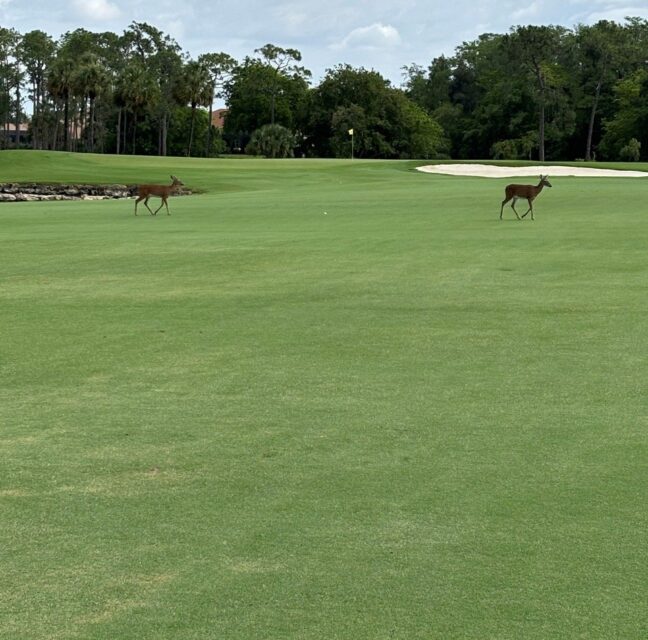
Few wildlife experiences compare to watching a Swallow-tailed Kite soar overhead on a spring or summer morning. The bird’s effortless flight embodies the beauty of Florida’s remaining wild landscapes. Whether gliding above the Grandezza golf course where we are fortunate to frequently see them, wetlands of Corkscrew, circling over the forests of CREW, or gathering in large flocks before migration, the species serves as a puzzle piece reminder of the enormous ecological mosaic that exists across the SWFL region.
The future of the Swallow-tailed Kite is closely tied to the preservation of Southwest Florida’s forests, wetlands, and wildlife corridors. As long as these habitats remain protected, future generations will continue to witness one of North America’s most spectacular aerial acrobats returning each spring from its incredible journey across the Americas. Through conservation, research, and public appreciation, the Swallow-tailed Kite can remain a defining symbol of Southwest Florida’s natural heritage for decades to come.
Links To Resources Mentioned in This Article: