


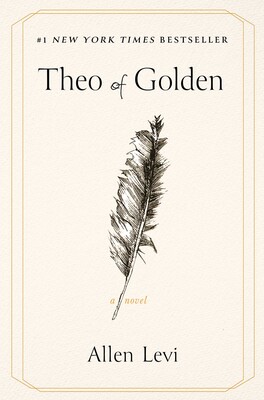
There is a particular kind of novel that does not announce itself with drama or spectacle, but instead arrives softly, like a stranger in a green flat cap sitting beside a fountain. Allen Levi’s debut novel, Theo of Golden, feels like a loving hug. It is the story of a mysterious eighty-three-year-old man who arrives one spring morning in a small southern city, visits a local coffeehouse, and discovers ninety-two pencil portraits of the townspeople lining its walls. What follows is one of the more quietly radical acts of generosity in recent fiction.
Theo, an elderly Portuguese man, decides to purchase the portraits one by one and gift them to their subjects. It sounds simple, almost whimsical, but the author understands that the act of returning someone’s likeness to them is, at its core, an act of profound recognition. What Theo exemplifies is the act of truly seeing another person is itself a form of kindness.
Theo’s circle in Golden expands to include Simone Lavoie, a graduate cello student; Basil Cannonfield, a street musician; Tony Wilcox, the witty owner of the Verbivore bookshop; and Ellen, an unhoused, intelligent woman with mental illness. Each of Theo’s encounters is its own small story, and Levi weaves them with warmth and care. In particular Theo’s relationship with Ellen is particularly poignant. After receiving her portrait, she shares that thirty years earlier, authorities took her infant daughter away, declaring Ellen mentally unfit. For Christmas, Theo sends her tools to develop her artistic creations, which she eventually grows into a small business. This is but one of the tender portrayals of how consistent, patient kindness can quietly restore a person’s sense of self and possibility. Theo’s intervention in her life and in the others’ lives allows each to stand up straighter, to appreciate their own worth, and to experience hope for the future.
Theo is full of hope and expresses love in a winsome way through kindness and generosity, although he asks questions more than he offers answers. He is genuinely curious about the people he meets, and that curiosity is itself a form of respect. His true identity is not revealed early on and this reviewer will not spoil your surprise.
Theo of Golden is an uplifting novel that earns its warmth. It argues, gently but persistently, that the invisible threads connecting us to one another are woven through small acts of attention. In a world increasingly distracted, that feels like a message worth hearing. Grandezza readers, this writer highly recommends Theo of Golden!