
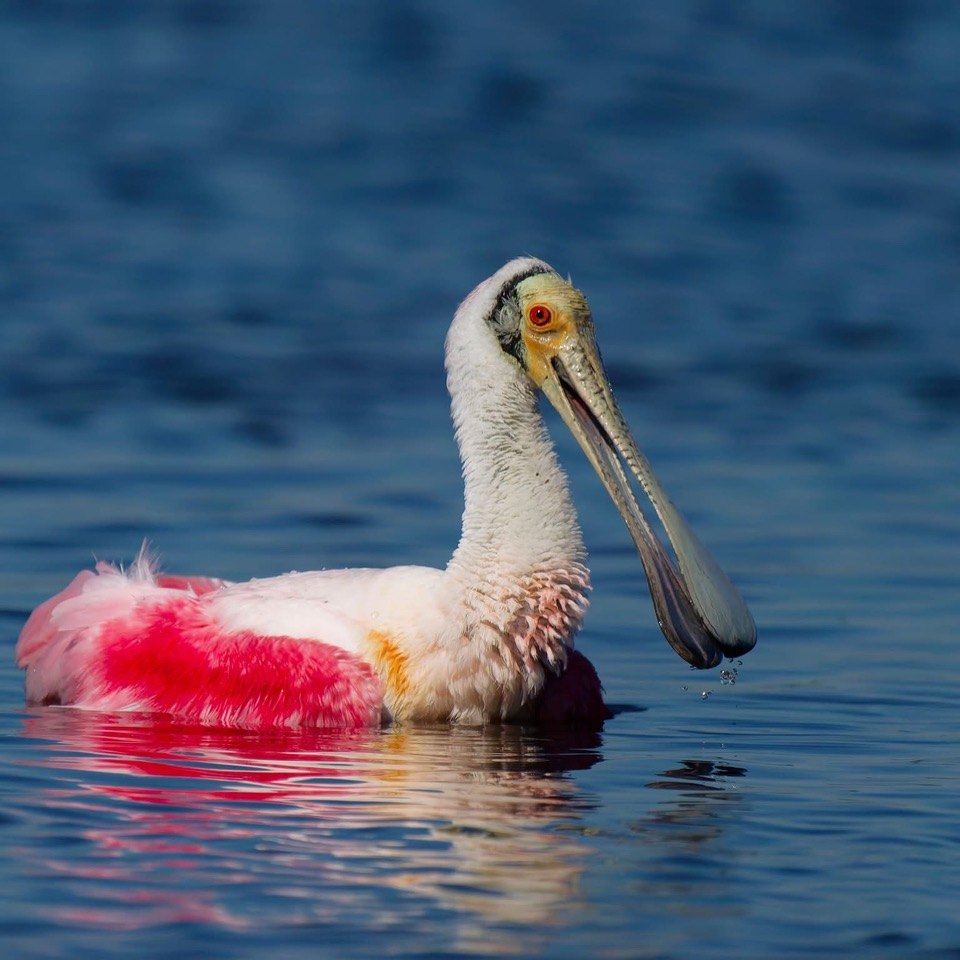
THE ROSEATE SPOONBILL: SOUTHWEST FLORIDA’S PINK JEWEL OF THE WETLANDS
Few birds capture the beauty and character of Southwest Florida quite like the Roseate Spoonbill (Platalea Ajaja). Its brilliant pink feathers, long legs, graceful neck, and distinctive spoon-shaped bill make this remarkable wading bird look as though it belongs in a tropical painting. Yet it is very much at home in the mangrove-lined estuaries, tidal flats, freshwater marshes, and coastal wetlands of Southwest Florida.
The Roseate Spoonbill is unmistakable when seen in good light. Its plumage ranges from pale pink to vivid rose, with deeper reddish-pink feathers on the shoulders and wings. The tail and wing feathers may reveal subtle orange or scarlet tones, while the head of an adult is largely bare, displaying greenish skin and a yellowish forehead.
Adults typically measure about 28 to 34 inches in length and have a wingspan approaching four feet. Despite their size, they move with surprising elegance, whether wading slowly through shallow water or flying overhead in loose groups.
Their most recognizable feature, however, is their broad, flattened bill that widens into a rounded spoon at the tip. This bill is a highly specialized feeding tool that allows the bird to find prey hidden beneath the water’s surface.
Roseate Spoonbills are members of the ibis and spoonbill family: Threskiornithidae. Although they might initially be mistaken for flamingos because of their pink coloration, they are entirely different birds with different feeding techniques and lifestyles.
Why Are They Pink?
The spoonbill’s coloration comes largely from carotenoid pigments in its diet. These naturally occurring pigments are found in aquatic organisms, including small crustaceans and other invertebrates. As spoonbills consume these foods, the pigments contribute to the pink and reddish tones of their feathers. Diet helps explain why individuals vary in color: some appear delicately blush-pink, while others display a much richer rose color.
Young spoonbills are generally paler than adults, gradually developing their characteristic coloration as they mature. This relationship between diet and plumage demonstrates one of the connections between a bird and its environment. A healthy wetland provides not only food but also the nutrients that help give the Roseate Spoonbill its signature appearance.
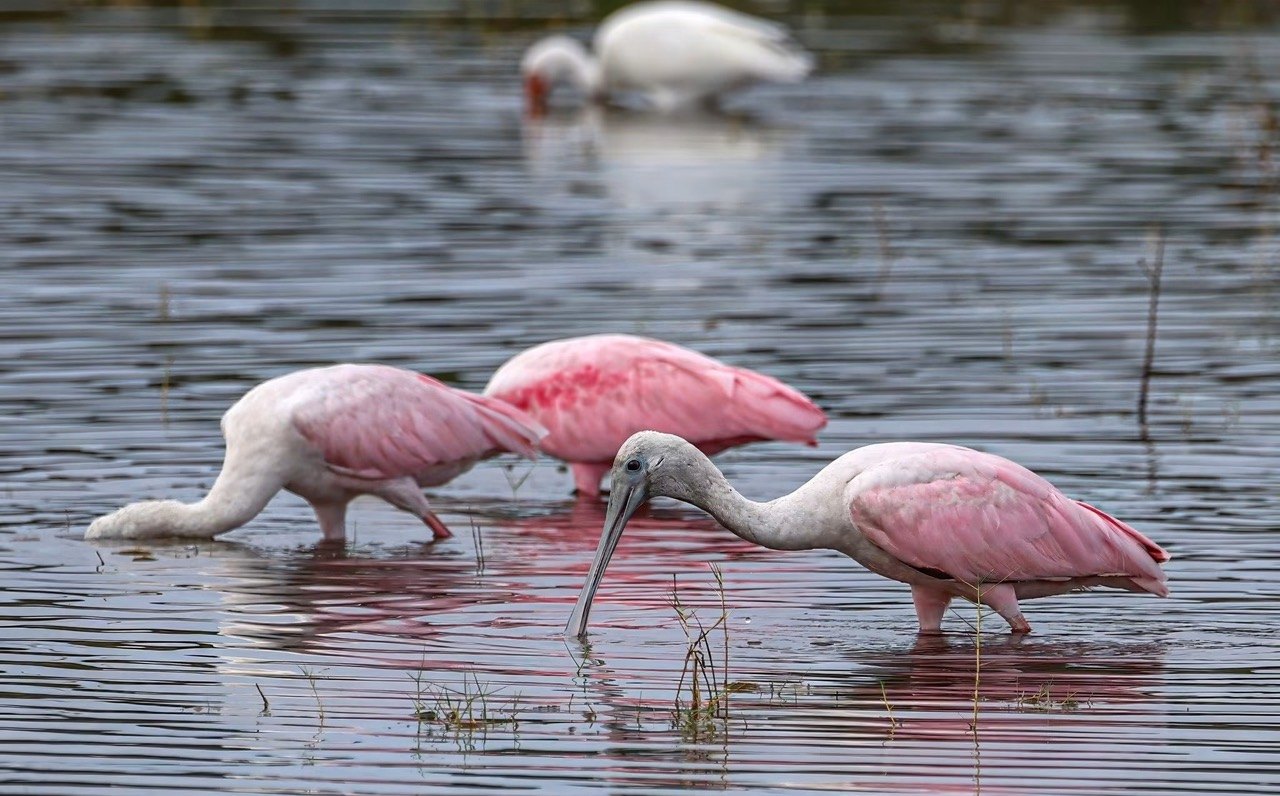
Watching a Roseate Spoonbill feed is one of the most entertaining experiences in Southwest Florida birdwatching. The bird typically wades through shallow water with its bill lowered and partially open. It sweeps the bill from side to side, probing the water and soft bottom for small fish, shrimp, aquatic insects, crustaceans, and other invertebrates.
Sensitive structures inside the bill help it detect prey through touch. When an unsuspecting animal brushes against the bill, the spoonbill can snap its jaws shut with remarkable speed.
Unlike a heron, which often stands motionless before striking at a fish, the spoonbill frequently feeds through continuous movement. Several birds may forage together, creating a synchronized spectacle of pink bodies sweeping their bills through the shallows.
Where to Find Spoonbills in Southwest Florida
Southwest Florida offers excellent opportunities to observe Roseate Spoonbills, particularly around estuaries and protected wetlands. Coastal estuaries and backwaters throughout Lee and Collier counties: Quiet bays, tidal creeks, and shallow shorelines can provide excellent feeding habitat, especially when water levels are favorable. Designated preserves and park like J.N. “Ding” Darling National Wildlife Refuge (Sanibel Island), Corkscrew Swamp Sanctuary, and Everglades National Park all feature marshes, mangrove estuaries, and shallow-water habitats that support spoonbills and many other wading birds.
Courtship, Nesting, and Family Life
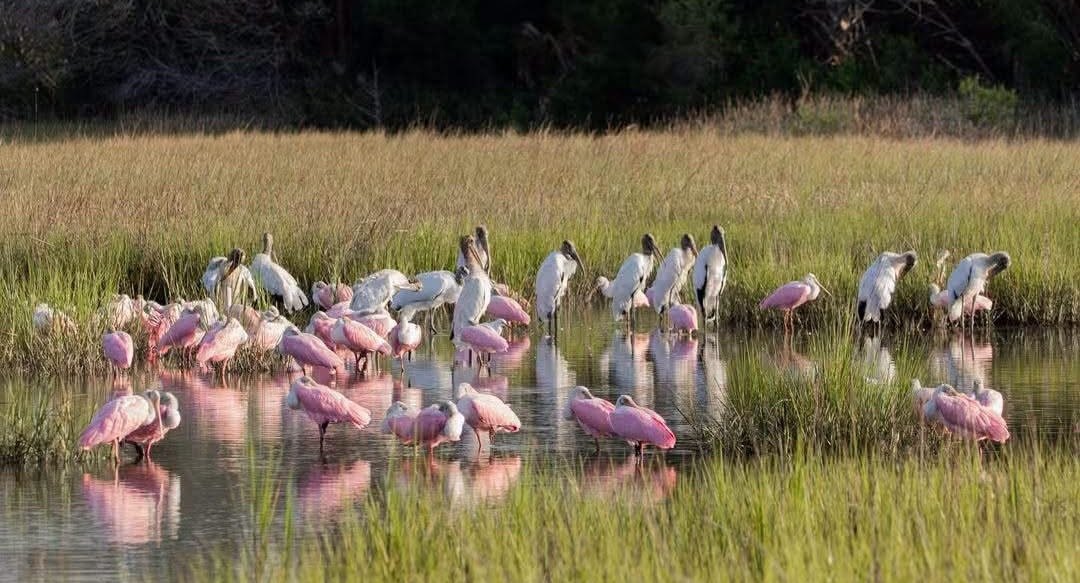
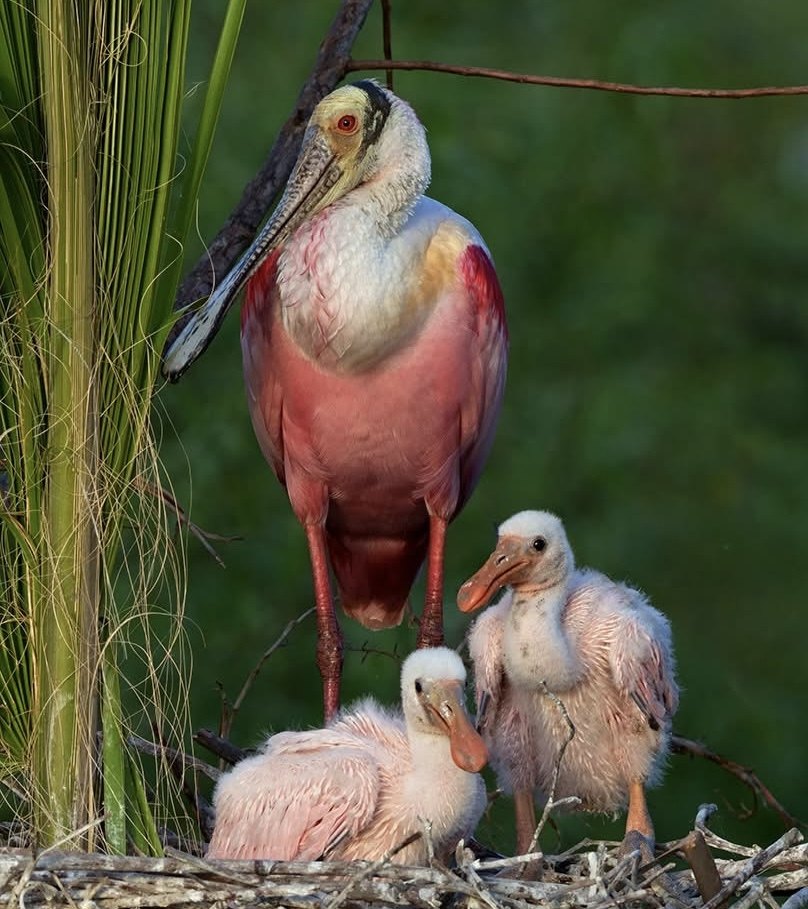
Roseate Spoonbills are social birds, often gathering in groups to feed, roost, and nest. During the breeding season, pairs establish nests in trees or shrubs, frequently on islands or in mangrove habitats that offer some protection from ground predators.
Both parents participate in caring for the young. They incubate the eggs and feed the chicks until the youngsters grow strong enough to leave the nest.
Conservation: Protecting the Pink Jewel
Although Roseate Spoonbill populations have recovered from severe historical declines in parts of their range, the species still depends on healthy, functioning wetlands. Loss of habitat, altered water flow, coastal development, pollution, and disturbance at nesting sites can affect their ability to find food and raise their young. In Southwest Florida, the protection of mangroves, estuaries, and freshwater wetlands benefit spoonbills as well as countless other species.
Whether sweeping its bill through a tidal pool, resting among mangroves, or gliding across a sunset-colored sky, the spoonbill brings a touch of tropical brilliance to our local landscape. Grandezza … It’s wild out there!