

Meet the Quiet Engineer That Supports More Than 350 Wildlife Species
“Every healthy gopher tortoise burrow is an underground neighborhood, protecting dozens of animals from heat, hurricanes, predators, and wildfire.”
A Living Bulldozer Beneath the Pines
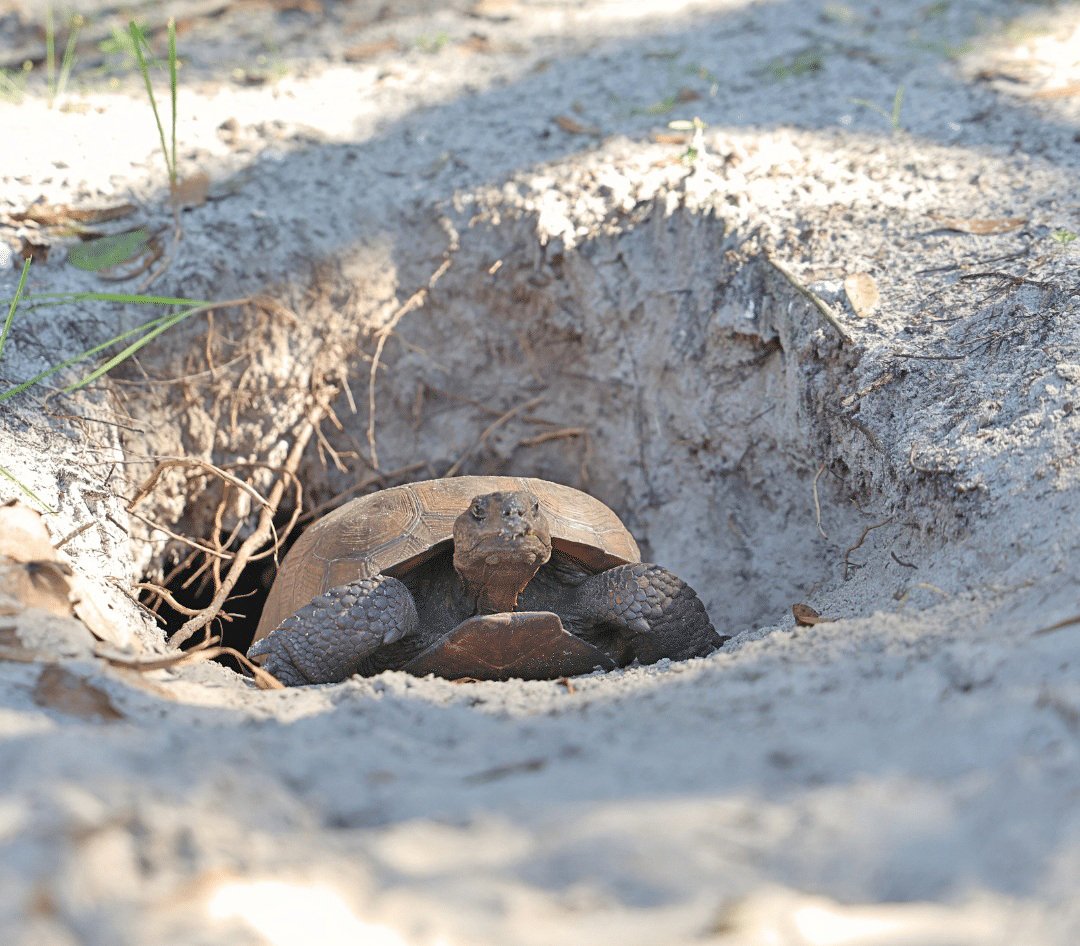
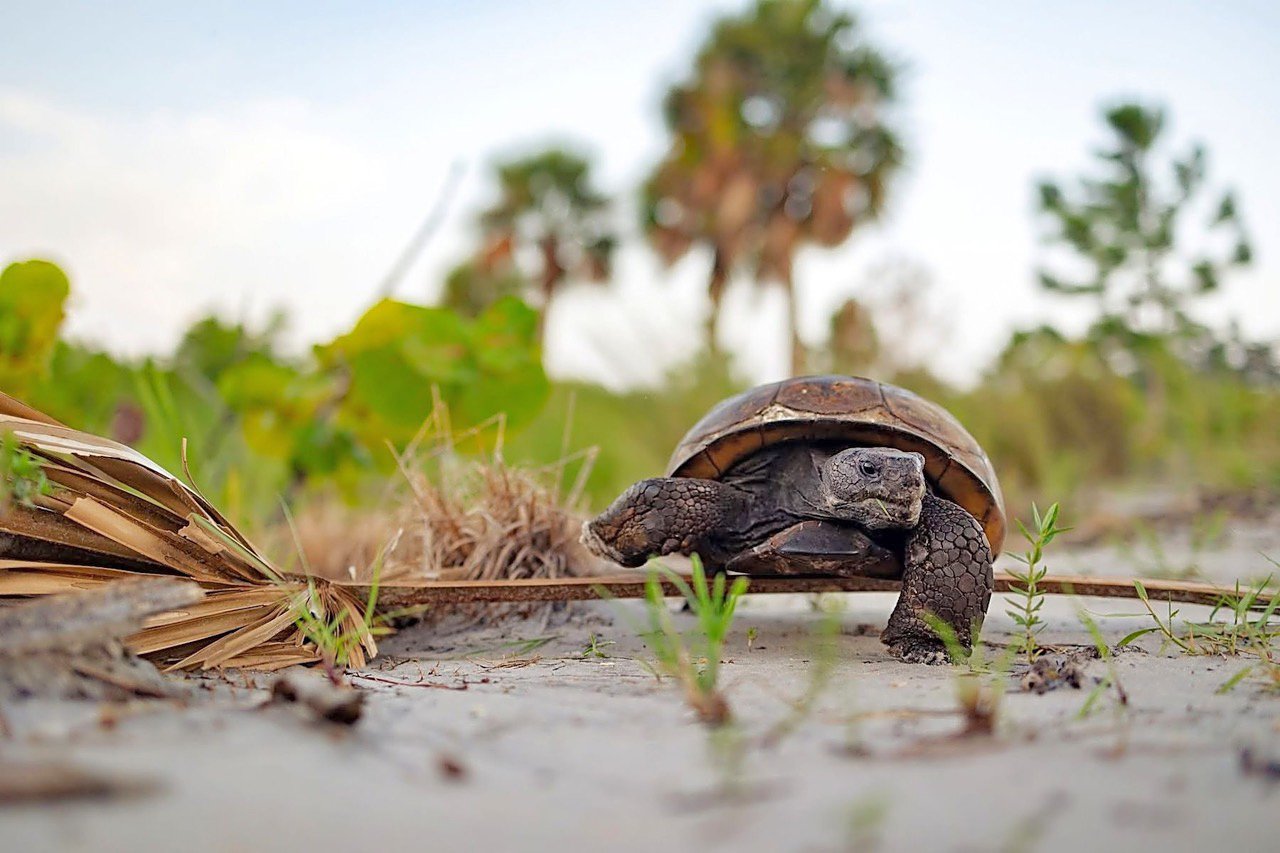
Walk through a pine flatwoods preserve in Southwest Florida on a warm morning, and you may notice a half-moon-shaped mound of freshly dug sand beside a wide opening in the ground. If you’re patient, a sturdy gray reptile may slowly emerge, pause to survey its surroundings, and begin grazing on a variety of grasses and wildflowers.
You’ve just met one of Florida’s most important—and most overlooked—wildlife species.
The gopher tortoise (Gopherus polyphemus) isn’t flashy. It doesn’t soar like a bald eagle, stalk prey like a Florida panther, or leap from the water like a dolphin. Yet scientists consider it one of the most important animals in the southeastern United States because of one extraordinary talent—it loves to dig.
Its burrows become life-saving shelters for hundreds of other species, earning the tortoise recognition as a keystone species, an animal whose influence on its environment is far greater than its numbers alone would suggest.
From Fort Myers and Estero to Naples, Punta Gorda, and Cape Coral, these gentle reptiles have quietly shaped Southwest Florida’s upland ecosystems for thousands of years.
Why Is It Called a “Gopher” Tortoise?
The name doesn’t come from the small mammal known as a gopher.
Instead, early settlers noticed the tortoise’s remarkable digging ability. Equipped with shovel-like front legs and sturdy claws, it excavates massive underground tunnels that rival the work of heavy construction equipment—only much slower.
Its scientific name, Gopherus polyphemus, references Polyphemus, the giant cave-dwelling Cyclops from Greek mythology.
Fact Box: Gopher Tortoise at a Glance
- Scientific Name: Gopherus polyphemus
- Family: Testudinidae
- Average Length: 9–15 inches
- Average Weight: 8–15 pounds
- Life Span: 40–60+ years
- Habitat: Pine flatwoods, scrub, sandhills, dry prairie
- Diet: Herbivore
- Burrow Length: Up to 40 feet
- Protected Status: State Threatened in Florida
Southwest Florida: Perfect Tortoise Country
Southwest Florida provides nearly ideal conditions for gopher tortoises.
Its sandy soils are easy to excavate, while open pine forests and scrublands produce an abundance of grasses, legumes, and flowering plants that tortoises depend upon throughout the year.
Healthy populations occur throughout:
- Lee County
- Collier County
- Charlotte County
- Sarasota County
- Hendry County
- Glades County
- DeSoto County
Some of the region’s finest tortoise habitats can be found in places such as CREW, Babcock Ranch Preserve, Estero Bay Preserve State Park, Charlotte Harbor Preserve State Park, and Picayune Strand State Forest. A couple of photos included later in the article were taken at Barefoot Beach near the south parking lot. This for me has been a common place for Gopher sightings.
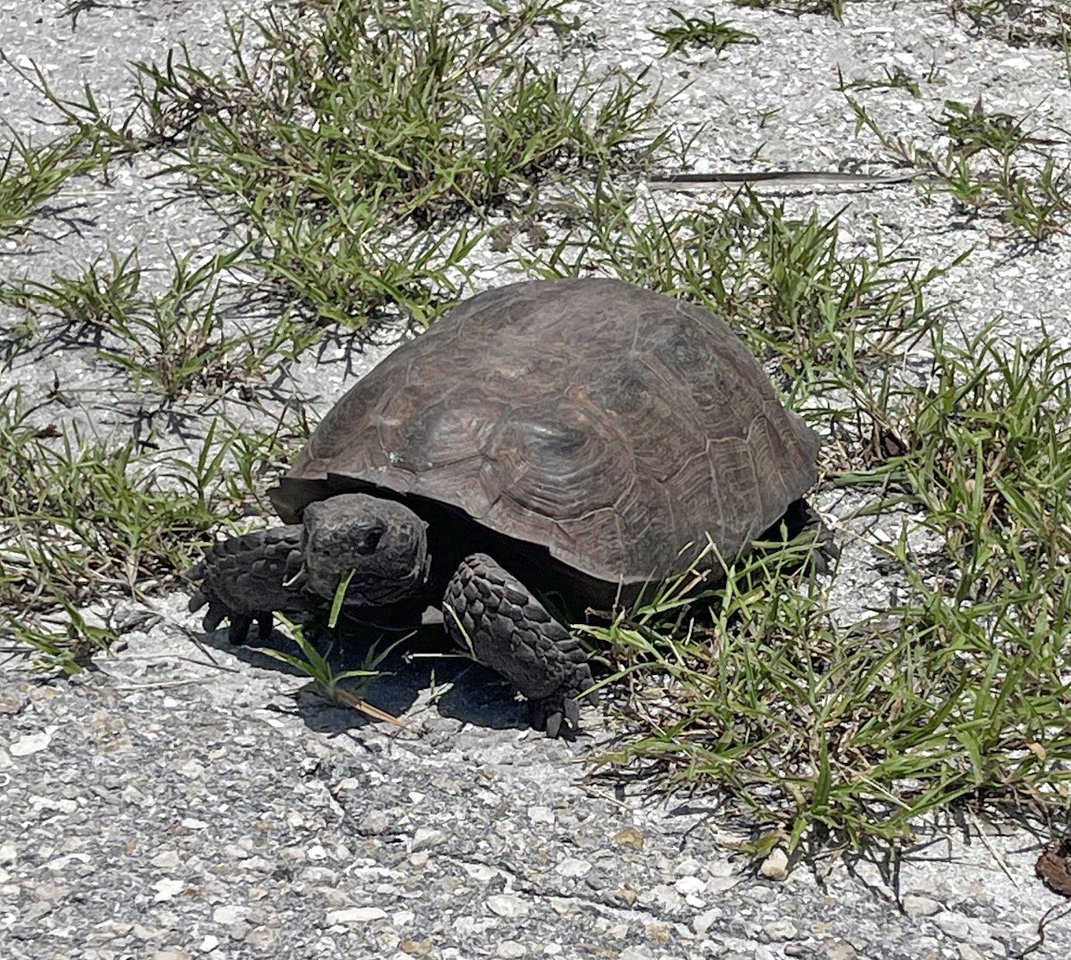
Interestingly, tortoises have also adapted to many human landscapes, including golf courses (next pic is from West Bay Golf & Country Club), utility corridors, schools, airports, and carefully managed residential communities.
Nature’s Underground Apartment Building
The gopher tortoise’s greatest contribution to wildlife lies underground. Its burrow may extend 40 feet in length and plunge 10 feet below the surface. Inside, temperatures remain remarkably stable year-round. When summer temperatures climb into the upper 90s, the burrow remains comfortably cool. When winter cold fronts arrive, it stays considerably warmer than the outside air. Scientists have documented more than 350 different species using these burrows.
Some visit only briefly while others cannot survive without them.
Who Lives in a Gopher Tortoise Burrow?
A single burrow may shelter:
- Eastern Indigo Snake
- Eastern Diamondback Rattlesnake
- Gopher Frog
- Florida Mouse
- Burrowing Owl
- Southern Toad
- Box Turtle
- Rabbits
- Opossums
- Skunks
- Armadillos
- Ground Beetles
- Crickets
- Scorpions
- Spiders
- Millipedes
- Numerous native insects
During wildfires and hurricanes, burrows often become emergency shelters for dozens of animals simultaneously.
Built for Digging
Everything about a gopher tortoise’s body reflects its underground lifestyle. Its powerful forelegs resemble miniature bulldozer blades. Massive scales protect their legs while digging. Strong claws loosen sand. The elephant-like hind feet then push loose soil backward, gradually creating the familiar fan-shaped mound seen outside every active burrow. A single adult may excavate several tons of sand over their lifetime.
Did You Know – Pied-à-terre?
A mature gopher tortoise may maintain several burrows within its home range, using different ones depending on weather conditions, food availability, or “How you doin?” breeding activity.
A Vegetarian With Excellent Taste
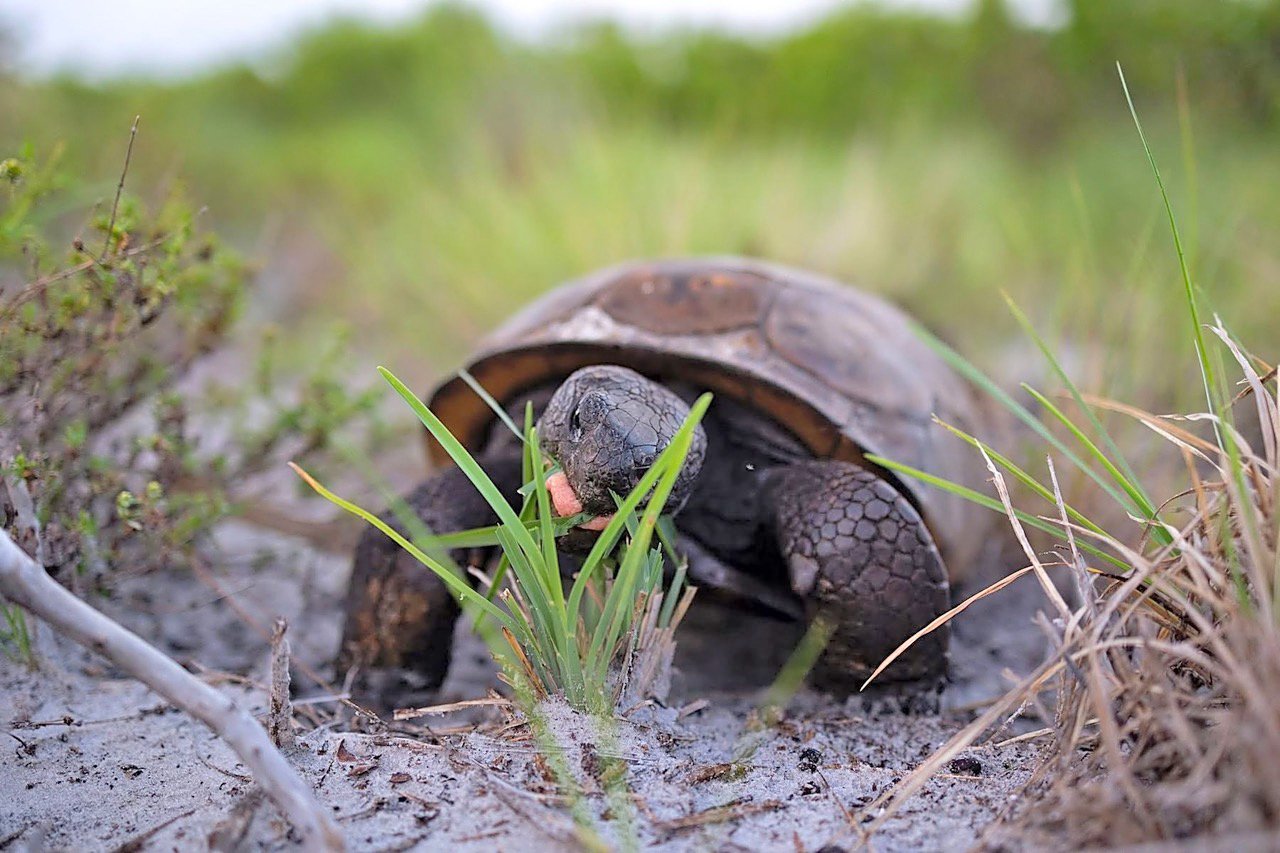
Gopher tortoises are almost entirely herbivores. Researchers have identified over 300 different plant species in their diet. Favorites include:
- Wiregrass
- Bluestem grasses
- Tickseed
- Milk peas
- Clover
- Gopher apple
- Saw palmetto fruit
- Prickly pear cactus
- Native wildflowers
- Mushrooms
Because they eat a wide variety of vegetation, tortoises help shape plant communities while dispersing seeds through their droppings
Fire Is Their Friend
To many people, wildfire represents destruction. For the gopher tortoise, fire represents renewal. Historically, lightning ignited regular fires across Florida’s pine ecosystems.
These low-intensity fires prevented dense brush from taking over while encouraging fresh grasses and wildflowers. When prescribed burns are conducted today, tortoises simply retreat underground until flames pass. The same burrows that protect them also save hundreds of other animals.
Prescribed Fire Matters
- ✔ Encourages fresh grasses
- ✔ Increases wildflowers
- ✔ Reduces dense shrubs
- ✔ Improves visibility for predators and prey
- ✔ Maintains healthy pine flatwoods
- ✔ Benefits more than 350 wildlife species
Growing Up Is Slow
Unlike rabbits or squirrels, gopher tortoises mature very slowly. Females often require 15 to 20 years before laying their first clutch of eggs. Most nests contain between five and eight eggs.
Unfortunately, very few hatchlings survive. Predators including raccoons, crows, snakes, foxes, and invasive fire ants consume many eggs and young tortoises before they reach adulthood. Those that survive may live for more than half a century. Some individuals likely exceed 80 years of age.
Sharing Our Neighborhoods
As Southwest Florida continues to grow, encounters between people and tortoises become increasingly common.
Many residents discover burrows beneath:
- Mailbox landscaping
- Golf course roughs
- Vacant lots
- Retention pond banks
- Community preserves
- School campuses
Finding a tortoise in your neighborhood is a good sign that quality native habitat remains.
If You Find a Gopher Tortoise
DO
- ✔ Enjoy watching from a distance
- ✔ Keep pets under control
- ✔ Drive carefully in tortoise habitat
- ✔ Report injured tortoises
- ✔ Leave burrows undisturbed
DO NOT
- ✘ Feed tortoises
- ✘ Place objects inside burrows
- ✘ Block entrances
- ✘ Attempt relocation
- ✘ Allow dogs to investigate burrows
Conservation Challenges
Although protected under Florida law, gopher tortoises face increasing challenges. The largest threat remains habitat loss. Southwest Florida’s rapid growth continues to replace pine flatwoods and scrub with residential communities, shopping centers, and highways.
Other threats include:
- Habitat fragmentation
- Vehicle collisions
- Illegal relocation
- Invasive plant & animal species (Iguanas, Nile Monitor Lizards)
- Disease
- Human disturbance
Because tortoises reproduce so slowly, recovering from population declines can take decades.
Fascinating Facts
They Rarely Drink Water
Most moisture comes from the plants they eat.
They’re Excellent Engineers
Some burrows remain occupied for decades.
Their Shell Is Part of Their Skeleton
Unlike cartoons, turtles and tortoises cannot leave their shells.
They’re Surprisingly Strong
A determined tortoise can move surprisingly large amounts of sand every day.
They Help Entire Ecosystems
Without tortoises, dozens of species would lose their underground shelters.
Quick Facts
- Fastest Speed: About 0.3 mph
- Activity: Diurnal (daytime)
- Best Habitat: Open, sunny uplands
- Number of Burrow Associates: 350+
- Largest Threat: Habitat loss
- Favorite Foods: Native grasses and legumes
Why Every Southwest Florida Resident Should Care
The gopher tortoise reminds us that nature’s most important creatures aren’t always the biggest, fastest, or most spectacular.
By simply digging a burrow and grazing on native plants, this quiet reptile supports an astonishing web of life beneath our feet.
Its tunnels provide shelter from hurricanes, refuge during wildfires, protection from predators, and stable temperatures throughout the year. Every active burrow is an underground sanctuary that helps sustain the extraordinary biodiversity for which Southwest Florida is known.
As our region continues to grow, protecting these ancient engineers means preserving entire ecosystems—from pine flatwoods and scrublands to the many birds, mammals, reptiles, amphibians, and insects that depend on them.
The next time you notice a fan-shaped mound of sand beside a wide burrow entrance, pause for a moment. Beneath the surface lies far more than a single tortoise’s home. It is a thriving underground community, carefully built and maintained by one of Florida’s greatest natural engineers.